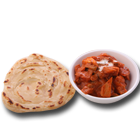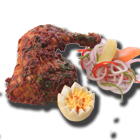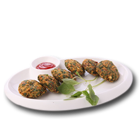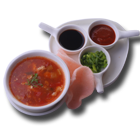
Indian Recipes have evolved over centuries and has flourished under the many rulers-that India had. Chefs vied with one another to create exotic delicacies for their rajahs. The result is centuries of patronage to the art of cooking and a large repertoire of delicious recipes. read more...
Indian Recipes are becoming popular due to its exotic flavors and healthful preparations. The repertoire of Indian Cuisine is vast and the following are some of the interesting aspects of the cuisine.
Cooking according to tastes: There are no written recipes in India and the individual is encouraged to orchestrate a dish by using fresh, seasonal and local vegetables. We use spices sparingly and our foods are not necessarily hot. Besides spices we use lots of herbs and other natural seasonings to make our foods sweet, sour, salty, bitter, pungent and astringent.
Cultural Influences: Many Indians are vegetarians having been influenced by Buddha (Indian King and founder of Buddhism), Mahavir (founder of ,Jainism) and King Ashoka. Our cuisine has been influenced by the Aryan settlers, the Arab and Chinese traders and conquerors such as the Persians, Mongolians, Turks, the British and the Portuguese. Ayurveda: lndia's ancient science, has given India a comprehensive system of health, diet and nutrition. India's cuisine has been shaped by this science. Ayurveda is the common thread that runs through the various sub cultures/regions of India. Otherwise, the cuisine can. Be vastly different from region to region.
Diversity: India is a large country, almost the size of Europe, and has a greater diversity of people, language, climate, cultures and religion than almost any country in the world. Consequently. Indian cuisine is also diverse.
Indian Restaurant Recipes: Many Indian restaurants around the globe are influenced by North Indian Cuisine. Indian restaurant cuisine has been influenced by Indian chefs who had their culinary training in France. They created a fusion of the two great cuisines by adopting cream sauces in their Indian recipes.
Recipes of Royal Kitchens of India: Under the patronage of the rajahs of India the art of food was elevated to a high level of advancement and professionalism. The royal chefs understood the finer points of food, the art of presentation and created exquisite preparations.
Indian cuisine is gaining popularity around the globe. It is easy to prepare, tasty and its mainstay is grains which is what people want today people want meals that are high in carbohydrates, have ample amounts of a variety of vegetables and contain complete proteins - it also has the health promoting properties of various herbs, ginger and spices. Yogurt, an accompaniment to Indian meals introduces good flora (acidophilus) into the digestive system. Many of our menus are vegetarian, which tend to be more alkaline than non-vegetarian menus. Fresh fruit follows Indian meals, which also contributes to an alkaline balance.
Since traditionally we cook with tastes rather than with recipes. Indian cuisine has very wholesome tastes designed to satisfy not only the taste buds but also the human physiology.
The hospitality of the Indians is legendary. In Sanskrit Literature the three famous words Atithi Devo Bhava' or 'the guest is truly your god' are a dictum of Indian hospitality. Indians believe that they are honored if they share their mealtimes with guests. Even the poorest look forward to guests and are willing to share their meager food with a guest. And of particular importance is the Indian host's pride that they will not let a guest go away un-fed or unhappy from their home. Indians are known for their incredible ability to serve food to their guests invited or uninvited.
There are some hot dishes especially in the South of India, but. overall the dishes of India are skillfully prepared with the cook having a mastery over the properties of spices and how they are blended. The cook will use cooling spices as well as warming spices, bland spices as well as pungent spices, sweet spices as well as hot spices. The cook will also use spices for color and healthful properties. Most cooks in India also know how to use spices seasonally In everyday cooking in India spices are used very sparingly and are supplemented with fresh herbal seasonings. read more...
Oils: In India, ghee (clarified butter) is favored for frying and seasoning. This is because it can take very high temperatures without becoming rancid unlike virgin oil or unrefi led cooking oils. Besides ghee, mustard oil is also used in Bengal and coconut/gingelly oil is used in the south. Sesame oil is also used especially in sweets.
Condiments: Fresh herbal chutneys, dried fruit chutneys and hot pickles complement an Indian meal: These small additions to the meal take the Indian menu to a higher level of taste experience. They lend strong flavor impact to the meal. They also balance tastes as they are sweet, pungent, hot, and sour all at the same time. The fresh herbal chutneys make the meal very fresh and tasty. Popular fresh chutneys are cilantro, mint, amla, coconut chutneys and popular pickles include lime, mango, and eggplant. Indian pickles are preserved in oil as opposed to vinegar.

Most Indian cuisines are related by the similar usage of spices and the use of a greater variety of vegetables than many other cuisine. Religious and caste restrictions, weather, geography and the impact of foreigners have affected the eating habits of Indians. read more...
For example, Brahmins (one of the highest orders of caste) are strict vegetarians usually, but in the coastal states of West Bengal and Kerala, they consume a lot of fish. Southern Indiansgenerally speaking has been orthodox in their tastes, probably because eating meat when it is hot all year round can be difficult. In the North, the weather varies from a scorching heat to a nail-biting cold, with a sprinkling of showers in between. So, the food here is quite rich and heavy Also, the Mughal influence has resulted in meat-eating habits amc-ng many North Indians. Also, a variety of flours are used to make different types of breads like chapathis. rotis, phulkas, puris and naan.
In the arid areas of Rajasthan and Gujarat, a great variety of dals and preserves (achars) are used to substitute the lack of fresh vegetables and fruits. Tamilian food uses a lot of tamarind to impart sourness to a dish, whereas Andhra food can be really chili-hot. It is believed that a hot and spicy curry may be one of the best ways to combat the flu virus! From, ancient times Indian food has been on principle, divided into the Satwik and Rajsik kinds. The former was the food of the higher castes like the Brahmins and was supposed to be more inclined towards spirituality and health. It included vegetables and fruits but, not onions, garlic, root Vegetables and mushrooms. The more liberal Rajsik food allowed eating just about anything under the sun, with the exception of beef. The warrior-kings like the Rajputs whose main requirements were strength and power ate this food.
Many Indian dishes require an entire day's preparation of cutting vegetables, pounding spices on a stone or just sitting patiently by the fire for hours on end. On the other hand, there are simple dishes which are ideal for everyday eating.
'Paan' is served as a digestive after some meals. The dark-green leaf of the betel-pepper plant is smeared with a little bit of lime and wrapped around a combination of spices like crushed betel-nuts, cardamom, aniseed, sugar and grated coconut. It is an astringent and is believed to help in clearing the system. Mumbai. is known to be a good place for connoisseurs of paan.
In the beautiful and rich valley of Kashmir, all dishes are built around the main course of rice. A thick-leafed green leafy vegetable called 'hak' grows in abundance here and is used to make the delicious saag'. The boat-dwelling people use the lotus roots as a substitute for meat. Morel mushrooms called gahchi' are harvested and consumed around summer time. The tea drunk in Kashmir is not orange pekoe or Twinning, but a spice-scented green tea called 'kahava', which is poured from a large meta! kettle, called 'samovar'. Fresh fish found in the many lakes and streams here are also consumed with relish. Lamb and poultry are cooked in the Mughlai style. The Kashmiri equivalent of the thali is a 36-course meal called the 'waazwaan'.
Bengalis eat a lot of fish and one of the delicacies called the hilsa' is spiced and wrapped in pumpkin leaf and cooked. Another unusual ingredient used in Bengali cooking is the bamboo shoot. Milk sweets from this region like the Roshgolla, Sandesh, Cham-cham are world famous. In the south of India, rice is eaten for breakfast, lunch and dinner. Raw rice, parboiled rice, Basmathi rice are some of the different types of rice eaten here. Parboiled rice is raw rice treated through a process wherein the ingredients and aroma of the husk are forced into the rice. Steamed rice dumplings or idlis, roasted rice pancakes or dosais are eaten along with coconut chutneys for breakfast. A dosai stuffed with spiced potatoes, vegetables or even minced lamb constitutes the famous 'masala dosai'. Coconut, either in a shredded, grated or blended form is a must in most dishes here. Tender coconut water is drunk for it's cooling effect on the system. The Chettinad dishes from Tamil Nadu consist of a lot of meat and poultry cooked in tamarind and roasted spices.
Most Andhra food tends to be quite hot and spicy. Eating a banana or yogurt after such a meal can quench the fires raging within the system. Hyderabad, the capital city, is the home of the Muslim Nawabs(rulers) and is famous for it's superb biriyani, simply delicious grilled kababs, kurmas and rich deserts(made with apricots).
In Kerala, lamb stew and appams, Malabar fried prawns and idlis, fish molie and dosai, rice puttu and sweetened coconut milk are the many combinations eaten at breakfast. Puttu is glutinous rice powder steamed like a pudding in a bamboo shoot.
Sweets are very popular all over India and are usually cooked in a lot of fat. Jalebis', luscious pretzel shaped loops fried to a golden crisp and soaked in saffron syrup can be had from any street vendor in North India. 'Kheer' or 'payasam' are equivalents of the rice pudding and 'Kulfi' is an Indian ice cream made in conical moulds and frozen.
Tea is drunk as a beverage in India. Tea from the hills of Darjeeling and Kalimpong are boiled in milk and water and served with a liberal dose of sugar. Filtered coffee is a favorite among South Indians and is a very sweet, milky version of coffee.